

A cavity does not always hurt at first. In the early stage, you may not feel anything at all.
As the cavity gets deeper, you may start to notice tooth sensitivity, pain when biting, a rough spot, food getting stuck, or a bad taste in your mouth.
If you think you may have a cavity, it is best to have a dentist check it. Small cavities are usually easier to treat than deep cavities.
At Green California Dental Group, we help patients in Burbank, Glassell Park, Eagle Rock, and the Los Angeles area find and treat cavities before they become bigger problems.
What Does a Cavity Feel Like?
A cavity can feel different depending on how deep it is.
You may feel:
- Sensitivity to cold drinks
- Sensitivity to hot foods or drinks
- Pain after eating something sweet
- A dull ache in one tooth
- Sharp pain when biting down
- Food getting stuck in the same spot
- A rough or sharp area your tongue can feel
- A small hole or pit in the tooth
- Bad breath or a bad taste
Some cavities are easy to feel. Others are hidden between teeth and can only be found during a dental exam or X-ray.
Can You Feel a Cavity When It First Starts?
Many early cavities do not hurt.
This is because the outside layer of the tooth, called enamel, does not have nerves. A cavity can start in the enamel without causing pain.
Once decay reaches the softer layer under the enamel, called dentin, symptoms are more likely to appear. You may start to feel sensitivity, mild pain, or discomfort when eating or drinking.
This is one reason regular dental checkups matter. A dentist may find a cavity before it causes pain.
Common Signs of a Cavity
Cavity symptoms can be mild at first. They may also come and go.
Common signs include:
- Tooth sensitivity
- Pain when chewing
- A visible dark spot
- A white, brown, or black mark on the tooth
- A rough area on the tooth
- A hole you can see or feel
- Food getting trapped between teeth
- Bad breath that does not improve
- A sour, bitter, or bad taste
You do not need to have every symptom. Even one symptom can be a reason to schedule a dental exam.
What Does a Cavity Look Like?
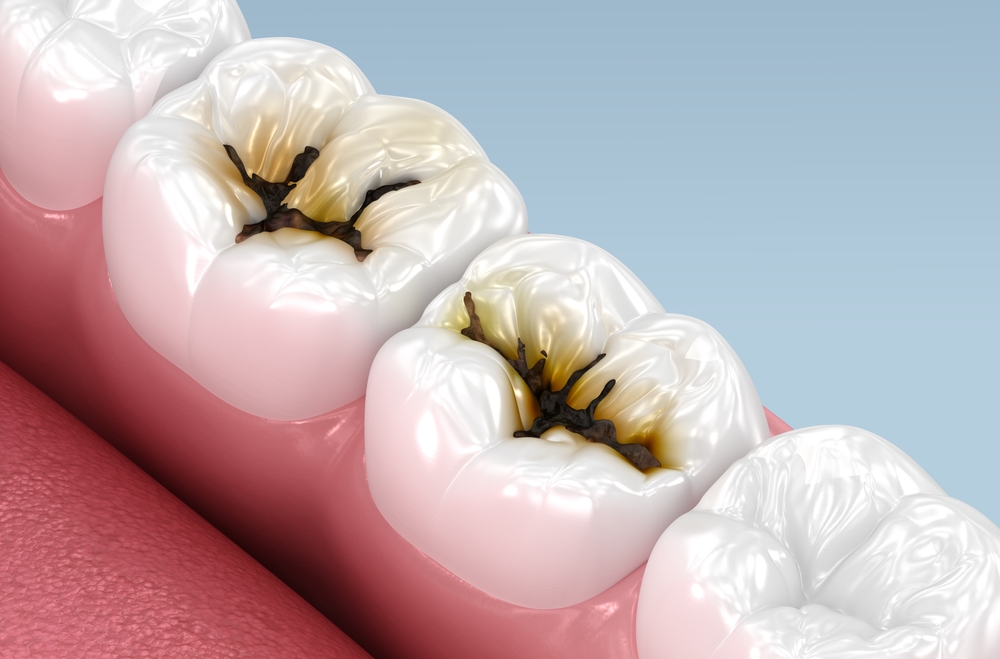
A cavity can look different depending on its stage and location. Early tooth decay may appear as a dull, chalky white spot on the enamel. As the damage progresses, the area may turn yellow, brown, gray, or black and develop a small pit or visible hole.
Not every dark spot is a cavity, and some cavities cannot be seen in the mirror. Decay between teeth or under an old filling may only be found during a dental exam or on an X-ray. See our visual guide to what a cavity looks like, including examples of early, moderate, advanced, and hidden decay.
Does a Cavity Hurt?
A cavity can hurt, but it does not always hurt.
Small cavities may not cause pain. A deeper cavity may cause sensitivity or pain because it is closer to the nerve inside the tooth.
Cavity pain may feel like:
- A quick zing when drinking something cold
- A sharp pain when eating sweets
- A dull ache that comes and goes
- Pain when biting down
- Throbbing pain if the tooth becomes infected
If a tooth hurts often, do not wait. Pain can mean the cavity has reached a deeper part of the tooth.
If a Cavity Hurts, Is It Too Late?
No. If a cavity hurts, it is not always too late to save the tooth.
But pain can be a sign that the cavity is deeper and needs treatment soon.
A painful cavity may still be treated with a filling if the damage is not too deep. If decay reaches the nerve, you may need a root canal or another treatment.
The sooner you see a dentist, the more options you may have.
What Does a Cavity Between Teeth Feel Like?
A cavity between teeth can be hard to notice.
You may not see it in the mirror. You may also have no pain at first.
Signs of a cavity between teeth may include:
- Floss shredding or catching in one spot
- Food getting stuck between the same teeth
- Sensitivity when drinking cold water
- Pain when biting
- A bad taste near the area
- Dark shadowing between teeth
Many cavities between teeth are found with dental X-rays. This is why checkups are important, even if your teeth feel fine.
What Does a Cavity on the Side of a Tooth Feel Like?
A cavity on the side of a tooth may feel like a rough patch, groove, or soft spot.
If it is near the gumline, it may also feel sensitive when you brush or drink something cold.
You may notice:
- A dark spot near the gumline
- A rough edge your tongue can feel
- Sensitivity when brushing
- Pain near the gumline
- Food or plaque collecting around the area
Side-of-tooth cavities can get worse if they are not treated. They may be easier to treat when found early.
Can a Cavity Cause Jaw Pain or Ear Pain?
Yes, a cavity can sometimes cause pain that feels like it spreads to the jaw, ear, face, or nearby teeth.
This is more likely when the cavity is deep or the tooth is infected.
Jaw pain can also come from other problems, such as grinding, gum disease, or a bite issue. A dental exam can help find the real cause.
If you have tooth pain with swelling, fever, drainage, or severe jaw pain, call a dentist right away.
Can a Cavity Smell or Taste Bad?
A cavity can sometimes cause bad breath or a bad taste.
This may happen when food and bacteria collect inside a hole or damaged area of the tooth.
You may notice:
- Bad breath that does not go away after brushing
- A sour or bitter taste
- A bad taste near one tooth
- Food getting stuck in the same spot
A bad smell or taste does not always mean you have a cavity. It can also be caused by gum disease, dry mouth, or infection. A dentist can check the area and explain what is causing it.
Can You Have a Cavity With No Pain?
Yes. You can have a cavity with no pain.
This is common in the early stage. It can also happen when the cavity is in a hidden area, such as between teeth.
By the time a cavity hurts, it may already be deeper. That does not mean it is too late, but it does mean you should have it checked.
How a Dentist Checks for a Cavity
A dentist can check for cavities in several ways.
Your visit may include:
- Asking about pain or sensitivity
- Looking at your teeth
- Checking for soft or rough areas
- Taking dental X-rays
- Checking between teeth
- Looking for damaged fillings or cracks
Once the dentist finds the cause, they can explain the best treatment.
How a Dentist Treats a Cavity
Treatment depends on how deep the cavity is.
A small cavity may be treated with a dental filling. At Green California Dental Group, composite fillings can restore the tooth with a tooth-colored material.
If the cavity is deeper, other treatment may be needed. This may include a crown or root canal treatment.
If you are having severe pain, swelling, or signs of infection, you may need emergency dental care.
When a Cavity May Become a Dental Emergency
A cavity may become urgent if the decay reaches the nerve or causes an infection.
Call a dentist promptly if you have:
- Severe tooth pain
- Swelling in the gums, cheek, or jaw
- Fever with tooth pain
- Pus or drainage near a tooth
- Pain that wakes you up at night
- Pain when biting that is getting worse
- A bad taste with swelling or pain
If you have trouble breathing, trouble swallowing, or major facial swelling, seek emergency medical care.
Cavity Treatment in Burbank
Green California Dental Group provides cavity exams and treatment at our Burbank dental office.
If you have tooth sensitivity, pain, or a rough spot on a tooth, our team can examine the area and explain your treatment options.
Cavity Treatment in Glassell Park Near Eagle Rock
We also treat cavities at our Glassell Park dental office near Eagle Rock.
This location may be convenient for patients in Glassell Park, Eagle Rock, Highland Park, Atwater Village, and nearby Los Angeles neighborhoods.
Schedule a Dental Exam for Cavity Symptoms
A cavity may feel like sensitivity, pain, roughness, a hole, or food getting stuck. It may also cause no pain at all.
If something feels wrong, do not wait for the pain to get worse.
Schedule a dental exam at Green California Dental Group. Our team can check the tooth, explain what is happening, and recommend the right treatment.