

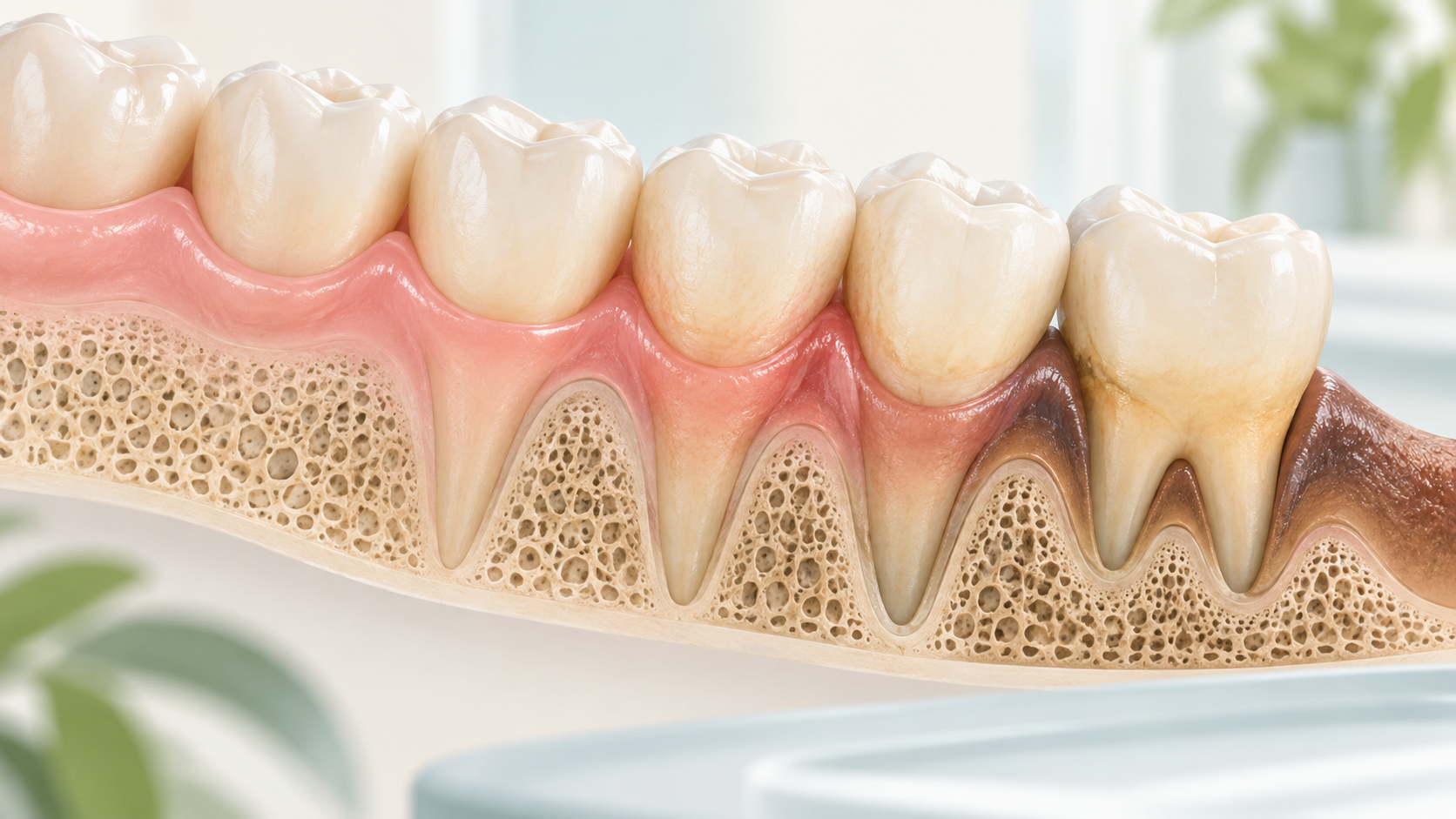
Bleeding gums can leave you wondering whether you need a better brushing routine or dental treatment. At Green California Dental Group, we begin by checking what is causing the bleeding and whether the tissues around your teeth have been damaged.
Gingivitis means the gums are inflamed. Periodontitis goes deeper, damaging the tissue and bone that hold teeth in place. That difference matters because it changes the care you need.
What the Stages of Gum Disease Mean
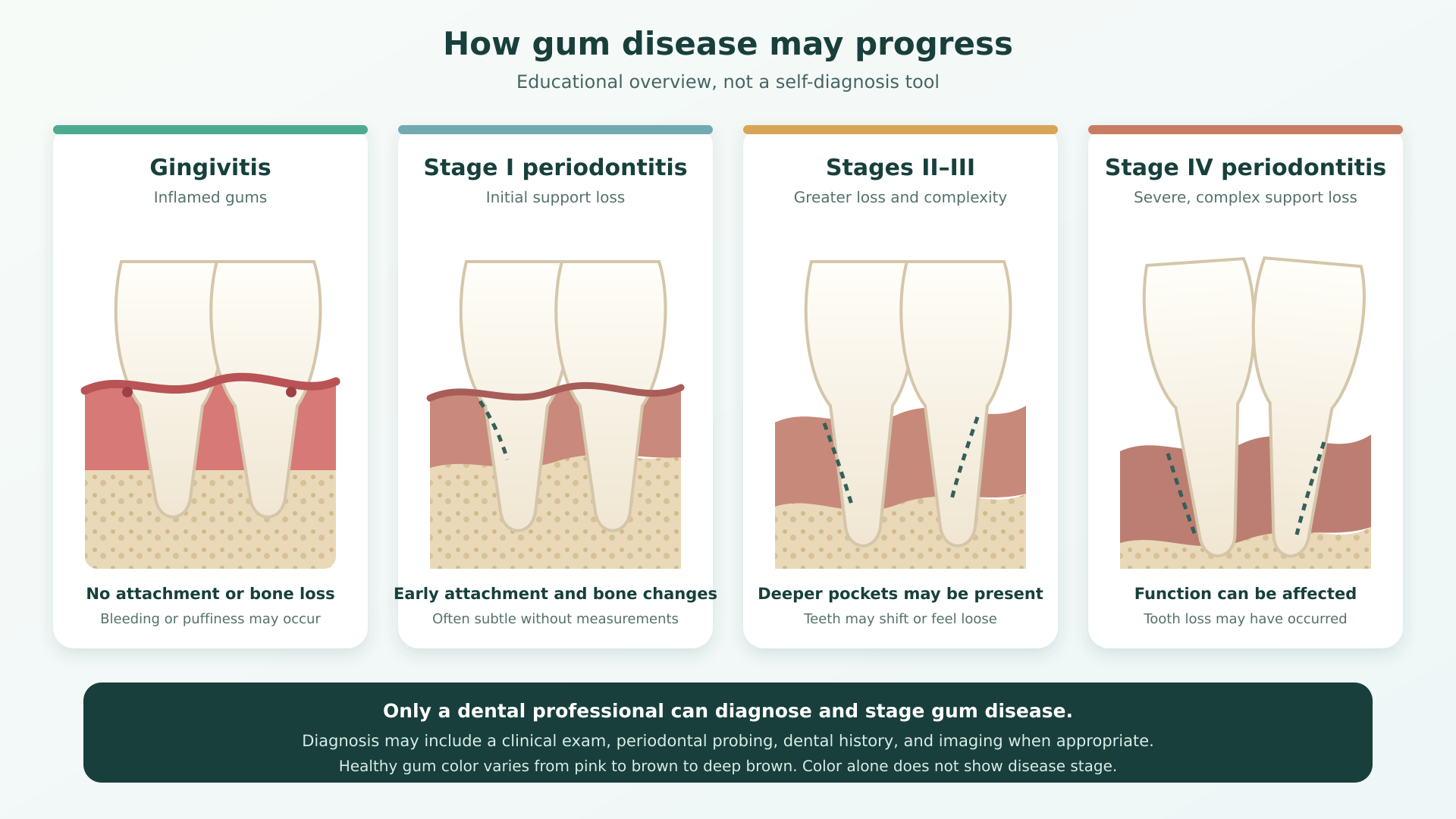
Gingivitis is not Stage I periodontitis. We use stages I through IV after diagnosing periodontitis to describe the damage and the difficulty of treating it.
| Condition | What it means for your teeth and gums |
|---|---|
| Gingivitis | The gums are inflamed, without loss of supporting bone or attachment caused by periodontitis. |
| Stage I periodontitis | Early damage has occurred in the tissues that hold teeth in place. |
| Stage II periodontitis | More support has been lost, though treatment is generally less involved than in stages III and IV. |
| Stage III periodontitis | There is severe damage around the teeth. Deep gum pockets and other problems make treatment more involved. |
| Stage IV periodontitis | Severe damage is accompanied by problems such as difficulty chewing, a shifting bite, or extensive tooth loss from periodontitis. |
The stage describes the condition now. A separate grade estimates how quickly it may worsen. Smoking and diabetes can affect that estimate.
We use measurements, X-rays, and your dental history to make this assessment. Under the clinical staging and grading system, we also consider your bite and any teeth lost to periodontitis.
Gingivitis: Why Your Gums May Bleed
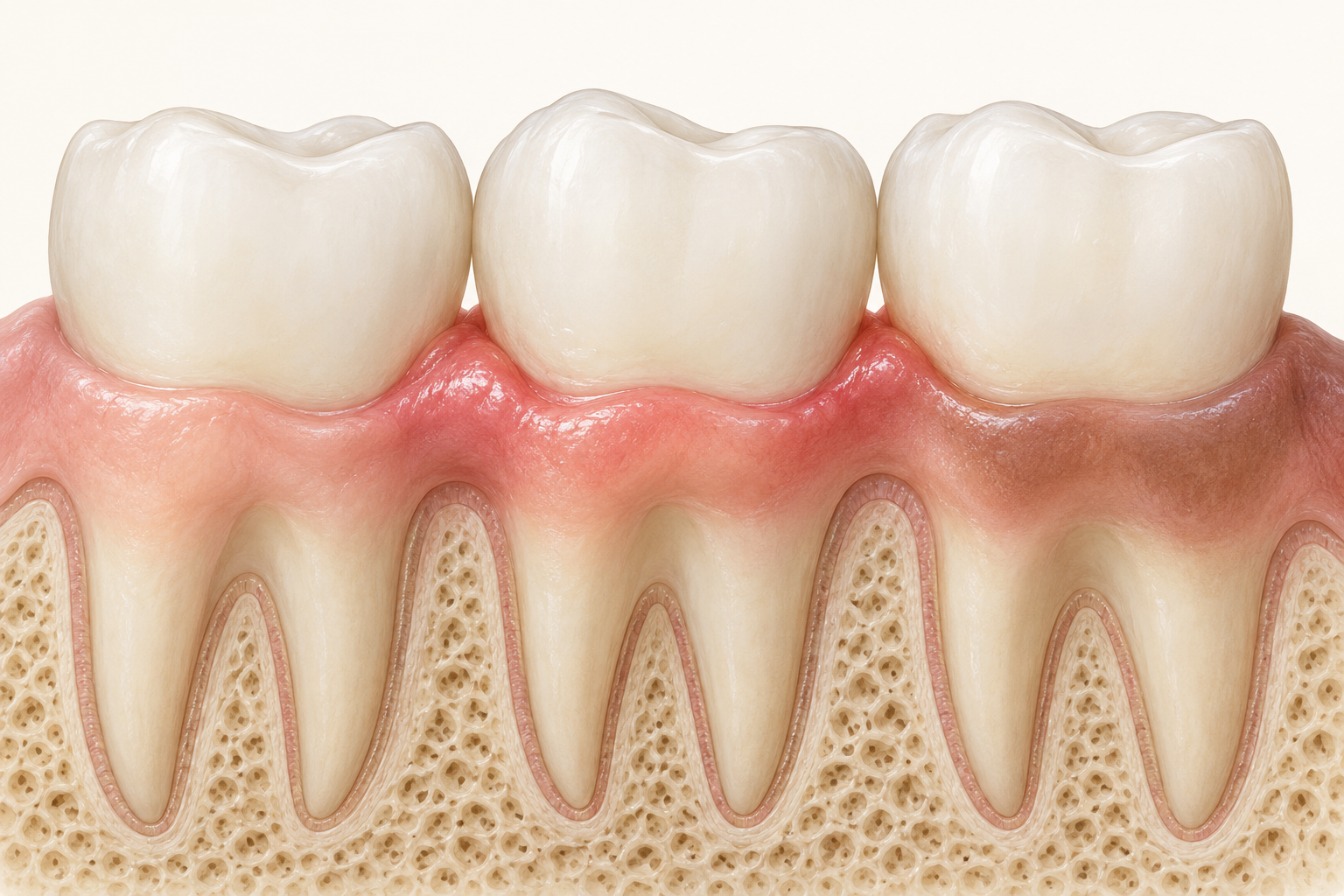
Plaque collects on your teeth every day, including along the gumline. The bacteria in it can irritate your gums. You may notice tenderness, swelling, or bleeding when you brush.
Gingivitis can usually be reversed with professional cleaning and daily care at home. During a cleaning, we remove tartar—the hardened buildup that brushing and flossing cannot lift off.
If your gums keep bleeding, tell us. Brushing more often is not always the answer, and gingivitis is not the only possible cause.
Periodontitis: What Changes Below the Gums
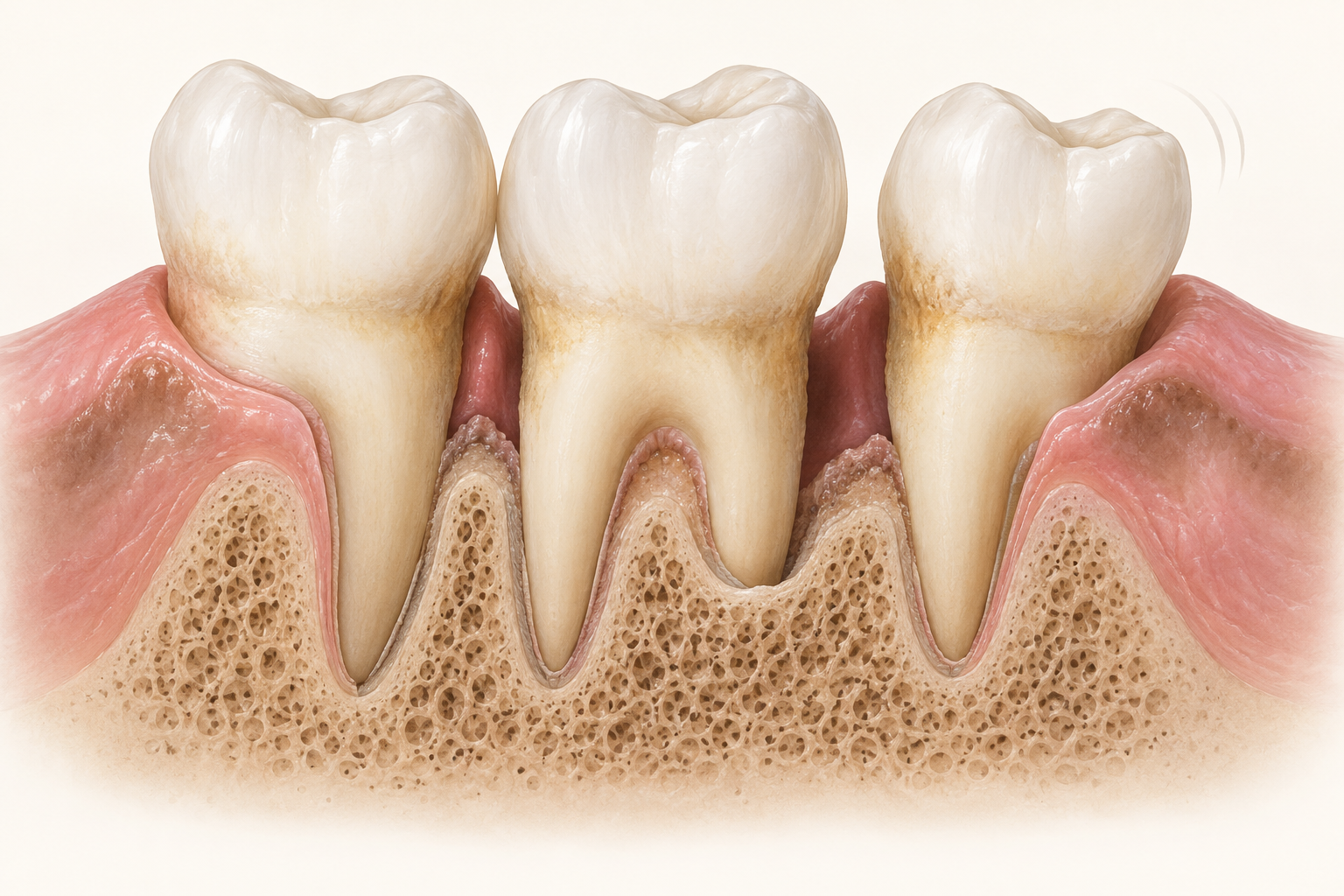
Periodontitis affects the attachment that keeps each tooth secure. As that attachment breaks down, pockets deepen and become harder to clean at home. Over time, teeth may loosen or move.
This does not happen to everyone with gingivitis. Smoking, diabetes, and other risk factors influence how the disease develops. We review those factors alongside what we find in your mouth.
Treatment focuses on controlling the infection and limiting further damage. You still need to brush and clean between your teeth, but those habits alone cannot rebuild bone that has been lost.
Gum Changes You Should Have Checked
Bleeding is one reason to contact us, but it is not the only one. Let us know about:
- Swollen or tender gums
- Bad breath or a bad taste that does not go away
- Gums pulling back from your teeth
- Pus beside a tooth
- Loose teeth, new gaps, or a change in your bite
- Pain when you chew
Don’t wait for these changes to become painful. Gum disease can develop without obvious symptoms, which is one reason regular exams matter.
When should you seek urgent care
Call a dentist urgently for pus, fever, facial swelling, rapidly worsening pain or swelling, or a tooth that suddenly becomes loose. Bleeding or swelling that continues also needs a dental appointment.
Seek emergency medical care for trouble breathing or swallowing, swelling spreading into your face or neck, or bleeding that will not stop.
What About Changes in Gum Color?
Your gums do not have to be pink to be healthy. Natural pigmentation can give them brown areas or a mix of colors, just as pigment affects your skin.
Tell us if a spot is new or an existing patch changes. A sore should also be checked. Comparing your gums with an online photo is less useful: the other person’s natural coloring and the lighting may be very different from yours.
What We Check at Your Appointment
Start with the change you have noticed and when it began. For example, does one area bleed when you floss, or are several teeth sore when you chew? We also ask about medicines and health conditions that may affect your gums.
During the exam, we measure the spaces around your teeth with a small tool. We check for bleeding, gum recession, and changes in your bite. X-rays may be needed to see the bone beneath the gums.
We put those findings together to explain whether you have gingivitis, periodontitis, or another problem. The American Academy of Periodontology’s patient guide offers more background on gum disease.
Some cases need a periodontist, a dentist who specializes in the gums and the tissues supporting teeth. Our periodontics services cover this area of dental care.
Choosing Treatment With You
A gum disease diagnosis does not mean everyone needs the same procedure. For gingivitis, we may recommend a professional cleaning and help with spots you are missing at home.
For periodontitis, we may recommend scaling and root planing, also called a deep cleaning. This treatment removes buildup below the gumline and smooths affected root surfaces. Depending on the damage, further care may include medicine, surgery, or specialist treatment.
We check your gums again after treatment. Are they still bleeding? Have the pockets improved? The answers help us decide how often you need follow-up cleanings and whether more treatment is needed.
You can read about our gum disease treatment options before your appointment. Bring any questions about what treatment involves or how to care for your gums afterward.
Looking After Your Gums at Home
Between visits, focus on removing plaque gently and regularly:
- Brush twice a day with a soft brush and fluoride toothpaste.
- Clean between your teeth daily with floss or another tool we recommend.
- Avoid tobacco. Ask for support if quitting has been difficult.
- Keep your dental checkups and recommended follow-up cleanings.
- Tell us about dry mouth, pregnancy, new medicines, or health changes, including diabetes.
If your gums bleed, do not scrub harder or stop cleaning the area altogether. Be gentle, and let us know if the bleeding continues. We can check both the gums and your brushing or flossing technique.
Leave tartar removal to a dental professional. Sharp tools can injure your gums, and harsh remedies such as bleach or aspirin placed on the gums can cause harm. Do not use leftover antibiotics to try to treat the problem yourself.
Let’s Check What’s Causing Your Gum Changes
If you are concerned about bleeding, receding gums, or a change in your bite, book a gum evaluation with us at Green California Dental Group. We will examine the area, explain what we find, and discuss your care with you.